ABOUT THE ARTIST
For Robert Kantor, sculpture is an act of optimism. Working primarily in steel and other metals, the American artist transforms industrial materials into expressive compositions that explore balance, movement, imagination, and the enduring possibility of hope. His work occupies a space between the monumental and the whimsical, where seemingly weightless forms challenge the inherent rigidity of their materials and invite viewers to reconsider the relationship between physical structure and emotional experience.
Kantor's artistic journey began in the 1960s, when his exposure to Alexander Calder and the great modernists sparked a lifelong fascination with kinetic sculpture. While studying at New York University, he created his first mobiles, discovering in their delicate equilibrium a visual language that would become central to his practice. Influenced by the organic forms of Henri Matisse and Joan Miró, as well as the imaginative spirit of Cervantes' Don Quixote, Kantor developed an approach to sculpture rooted in both formal experimentation and a deeply held belief in the power of possibility.
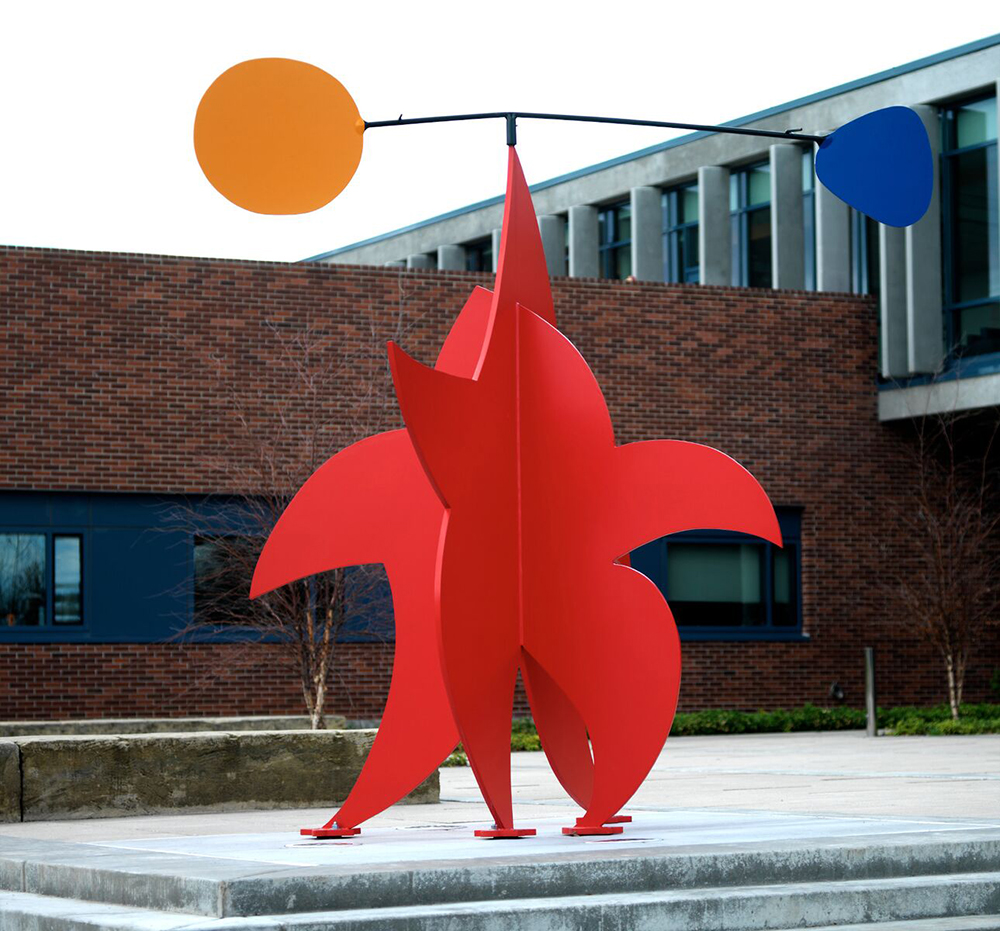
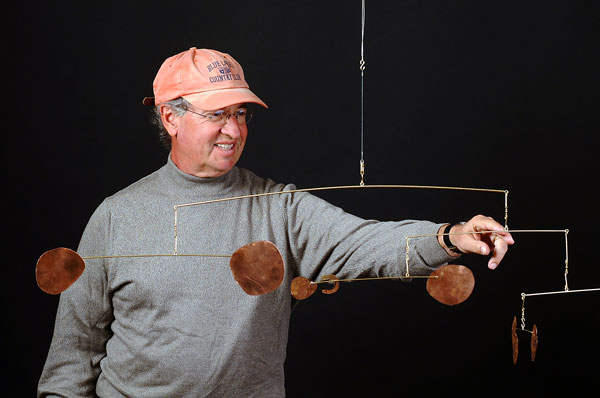
Following a successful career in law and business, Kantor returned to sculpture with renewed intensity in the late 1990s, establishing a welding studio in Shoshone, Idaho. His practice expanded into large-scale works, combining the precision of metal fabrication with an intuitive, almost improvisational creative process. Whether creating soaring outdoor sculptures, delicately balanced mobiles, or conceptually driven installations, Kantor consistently seeks to reconcile opposing forces: weight and weightlessness, permanence and movement, strength and vulnerability.
Underlying his work is a distinctly humanist philosophy. Kantor approaches art as a means of communicating optimism without denying the complexities of human experience. His sculptures embrace humor, beauty, and playfulness while engaging more profound questions of equality, resilience, and our shared humanity. In his hands, steel becomes something unexpectedly lyrical—a medium through which even the most improbable dreams might take form.
His work has been exhibited at Ochi Gallery and the Center on Contemporary Art in Seattle, with public installations at Boise State University and the Napa Valley Vintners Community Health Center, among other locations.